
Most digital transformation projects don’t fail because of bad technology; they fail because of a massive execution gap between boardroom strategy and ground-level reality.
We have all seen the fancy presentations. They show big arrows going up, perfect diagrams, and promises that new technology will change everything.
But in the real world, things look different.
Even though companies spend billions on technology, most of these projects slow down or fail. They don’t fail because the idea was bad or the tech didn’t work. They fail because there is a huge gap between the plan made in the office and the actual work done on the ground.
Digital change isn’t just about buying new software; it’s about changing how a company works. Here is why things break down—and how to fix it.
The Trap of Doing the Same Thing Faster
The biggest mistake is using new tools to do old, broken tasks.
If you take a confusing, slow process and put it on a computer, you haven’t fixed it. You’ve just made a bad process move faster. Real change means having the courage to take apart the way you work and build it better from scratch.
The Lesson: Ask, “Why do we do it this way?” instead of just “How do we make this digital?” If you skip this, you end up with expensive tools that employees hate using.
Thinking the Tool is the Solution
Many of us think that buying the right software solves everything. They confuse the “tool” with the “result.”
A platform is just a tool. It doesn’t work by itself. Projects fail when leaders expect the software to change the company culture for them. You need a plan for:
A) How do different tools talk to each other?
B) Who is responsible for the information?
C) How does it actually help the person using it every day?
Without this, you get a mess of different systems that don’t work together.
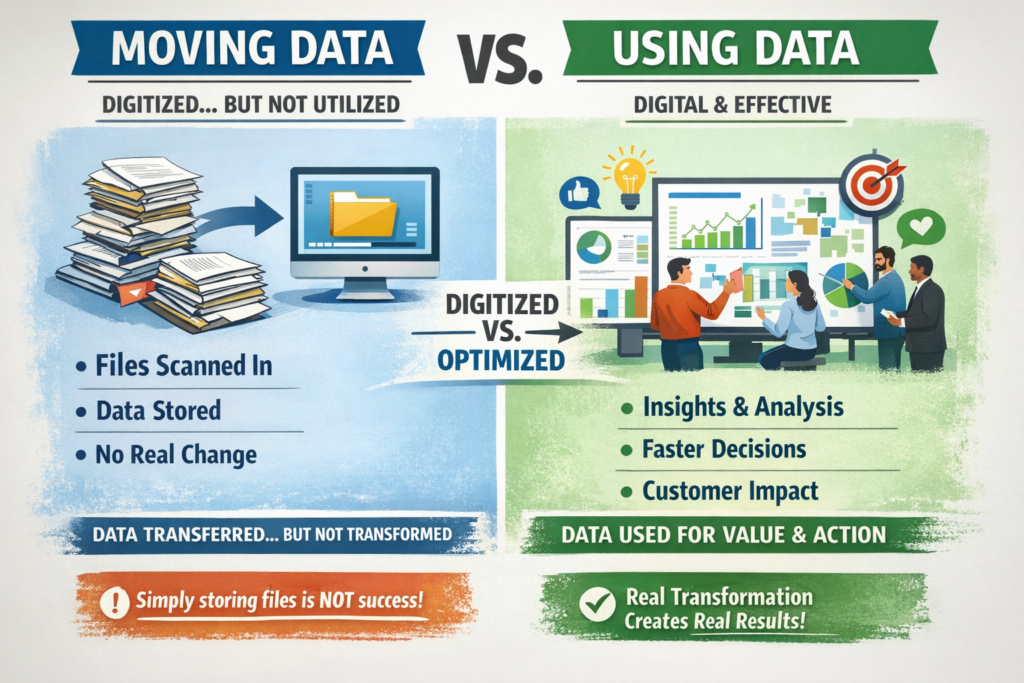
Moving Data vs. Using Data
There is a big difference between just moving paper files to a computer and actually using that data to work better.
Many projects stop too early. They think they are finished once the data is “digital.” But the real goal is to use that data to make faster decisions and help customers.
Success should be measured by the value you create, not just how much data you moved. If your “transformation” hasn’t changed how you make decisions, you are just storing files in a new place.
Forgetting the People in the Middle
The people at the top make the plan, and the workers at the bottom do the work. But the project lives or dies with middle managers.
This group has the hardest job. They have to hit their daily goals while also learning a brand-new system. When projects fail, it’s often because these managers weren’t given the support they needed. They need to know it’s okay to hit a few bumps in the road while they learn.
Also Read: Upskilling at speed building a future ready workforce
How to Move Forward: Closing the Digital Transformation Gap
To close the gap, we need to change how we think. We should care more about whether people actually use the tool than how many features it has.
Digital transformation isn’t a project with an end date. It’s a new way of being fast and flexible. The companies that win are the ones that realize tools are just tools—the real change happens when people change how they think.
___________________________________________________________________________________
About the Author: Ankit Jain is a Senior Manager, Business Analyst with 14 years of experience. He helps businesses connect their big plans with the technical work needed to make them happen. Ankit is passionate about using data to make real improvements in how companies run.