
A technology-based B2B market rarely experiences growth driven by the success of a particular campaign or by the tightening of the spotlight’s collective attention over a brief period of time.
Complex buying decisions are made after months of consideration, rather than days or weeks. However, many technology-based B2B marketers are still operating in “Campaign Mode,” where success is measured by the number of leads, rather than the number of deals influenced.
With the advent of competition in digital transformation, the future is not about marketing campaigns, but about developing scalable and smart marketing systems that can deal with long and non-linear buyer journeys.
This blog post will discuss the development of B2B marketing activities from campaign-based execution to systems-based growth.
The Problem with Campaign-Led Marketing in Long Sales Cycles
The classic campaign-led marketing model is designed for the short game, such as clicks, form submissions, and conversion goals. This is great for B2C sales, but not B2B, particularly with the additional complexity of approvals for large sales and long evaluation cycles.
Furthermore, in complex sales, customers don’t usually convert after the first interaction. They self-research, come back to the content multiple times, and interact with the vendors sporadically over a period of months. The campaigns that start and stop are missing the point of the extended period of intent and can result in disjointed messaging and stalled momentum.
Key Learning
In the B2B tech space, campaigns must be a tactical component—not the building block. Sustainable growth emanates from a strategy based upon relationships as assets over time, not from periodic and quarter-based peaks in engagement.
From Lead Generation to Demand Orchestration in B2B Marketing
Today’s B2B marketing is no longer about “lead generation” but about orchestrating demand throughout the buyer’s journey. This involves engaging with accounts before they are ready to buy and remaining top of mind long after the initial touch.
Account-based marketing, lifecycle marketing, and always-on content engines are all expressions of system-level thinking. Instead of asking, “How many leads did this campaign drive?”, the question that needs to be asked is, “How well are we moving accounts down the path towards a purchase decision?”
All things considered, technology plays a crucial role in this area. The ability to integrate CRM, marketing automation, and analytics platforms allows for the measurement of engagement at the account level and the synchronization of marketing efforts with sales results.
Key Learning
B2B marketing systems must be designed to facilitate buyer progression, not discrete conversions. Demand orchestration helps align marketing activity with the actual behavior of enterprise buyers.
The Use of AI and Generative AI in Building Marketing Systems
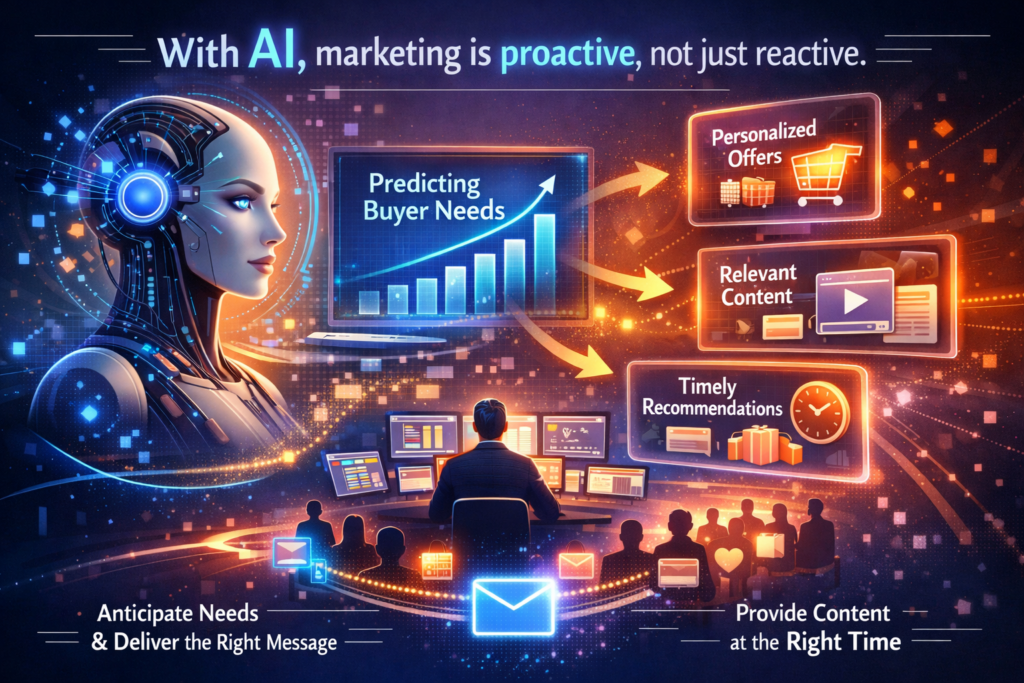
AI is a paradigm-shifting technology that is radically changing the way B2B marketing systems work. Predictive analytics assist in the identification of high intent accounts, and machine learning algorithms assist in optimizing channels, timing, and messaging.
Generative AI takes these features to the next level with the ability for personalization at scale. Personalization, for instance, means AI-generated content for various personas, and conversational chatbots for lead qualification and development. AI makes communications more pertinent and saves a lot of human drudgery.
The bottom line: with AI, you can test your messages in real time, running A/B experiments as you go instead of waiting until campaign results come in to see what worked and what didn’t.
Moreover, with AI, marketing is proactive, not just reactive. Rather than reacting to the performance of marketing after the fact, marketing systems can predict the needs of buyers and provide the appropriate content at the appropriate time.
Key Learning
AI assists B2B marketers to move from just doing their jobs to developing strategies that are intelligence-based. The difference it makes is that, in the case of AI, B2B companies interwoven into their marketing mix tend to gain momentum, show acceleration in growth, and consequently hold an unequivocal edge over competitors.
Measuring What Truly Matters: Moving Beyond Vanity Metrics to Real Revenue Impact
The problem of measuring success in complex sales cycles is among the toughest in B2B marketing.
Metrics like CTRs and MQLs provide little insight into revenue performance. Systemic marketing requires a more advanced measurement framework. The key numbers to track include pipeline impact, velocity, engagement depth, and revenues generated and attributable to marketing.
Indeed, an intimate connection between marketing and sales is essential and offers both groups a common definition of success. Using advanced attribution and sophisticated analysis created by AI technology makes it possible to track marketing touchpoints and ultimately revenue metrics, even in complex sales paths.
Key Learning
Measure = market.
Metrics aligned with revenue goals reinforce systemic thinking and inform better decision-making.
Developing B2B Marketing as a Scalable Growth Engine
At the core of the matter, systemic thinking in B2B marketing is about recognizing marketing as an enterprise-wide business system, rather than just an enabling function. With this, there is a need to align marketing, sales, and product groups more closely, as well as the right technology and common objectives to achieve this integration. The concept is to develop a unified solution that scales or flexes well without breaking under changes in market trends, new technologies, or customer needs. When you are in the quick-paced B2B tech industry, growth is not only desirable but necessary.
Conclusion: moving from quick wins to a durable competitive advantage.
A new mindset is needed for long-cycle B2B marketing. By moving “from campaigns to a system,” organizations can reach buyers end to end, utilize AI and Generative Technology, quantify results, and build strong growth engines. Campaigns get results in the short term; systems drive long-term market competitiveness.
Also Read: Digital transformation that works bridging strategy and execution
Frequently Asked Questions
Why are campaigns ineffective for long B2B sales cycles?
Because of the length of the time involved for an enterprise purchase, a campaign’s start and stop are ineffective in maintaining a constant level of engagement for the entire decision cycle.
What does a B2B marketing system look like?
It’s a continuous practice which merges technology, data, content, and process to engage with and nurture buyers-from the very first moment they notice you, right through purchase and beyond.
How does gen AI benefits B2B Marketers?
A generative AI benefits B2B marketers in three important ways: through personalization, increased content production, and increased engagement. This means the brand stays at the top of the minds of the customers.
What metrics are of key importance to B2B marketers?
Consider pipeline impact, account engagement, deal velocity, and marketing-revenue attributions to measure the true business impact.